Graham Farms is a cash crop operation located in the village of Wyevale, part of Tiny Township. Dave and Sarah Graham crop corn, soybeans and wheat and collaborate a bit with Dave’s parents who have a forty head cow-calf operation and crop land of their own.
Dave took a two year Agricultural Management degree at Olds College in Alberta before returning to the farm to work full time. Initially he worked for his dad, Greg, who is also a tile drainage contractor. Once able, Dave transitioned to his own full time farming work and hasn’t looked back.
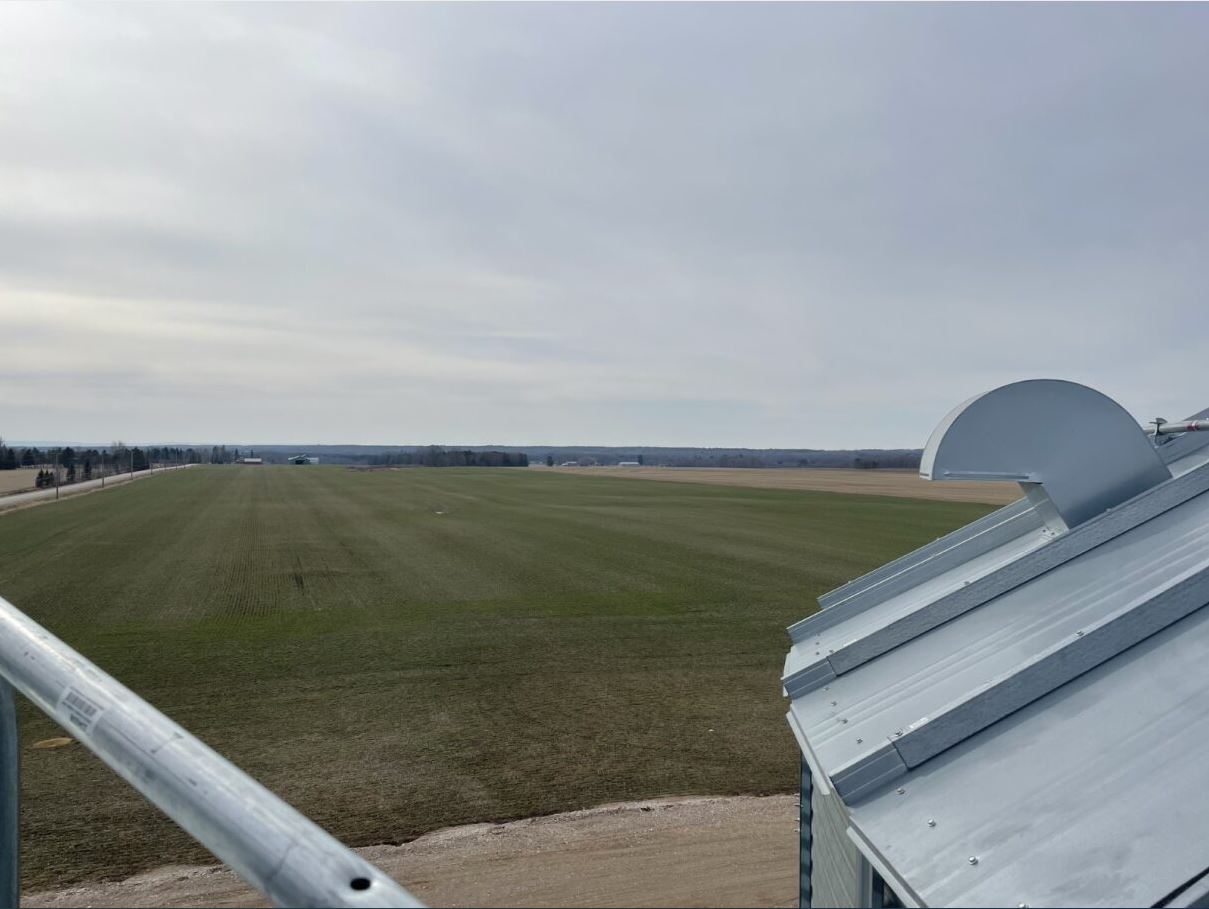
Dave works a total of about 1500 acres between owned and rented land, in a traditional rotation of corn, soybeans and wheat. A typical farmer, he spoke humbly about the farm and didn’t seem to think he had much to share, then went on to describe several unique management practices that he has tried and learned from in the past.
Dave noted that they have a lot of variability across the land that he works – anything from very heavy clay to sand, lots of gently rolling topography, some very stony and some completely stone free. He tried to use no till practices at one point, but found that he had emergence challenges and couldn’t get the corn maturity that he’d hoped with it. Since then, they have switched to minimum tillage using a high speed disc. This usually lets them get fields smooth enough for a single pass in the fall, right behind the combine.
Graham Farms integrates cover crops where possible. Dave said that he tried to use rye, but had challenges with his wheat crop, as they could share pests and disease. He’s also tried red clover but found it variable whether he’d get a good catch, and the seed is expensive. The favourite cover for the farm has recently been an oats and radish mix which can be sprayed out around Thanksgiving weekend to kill any volunteer wheat.
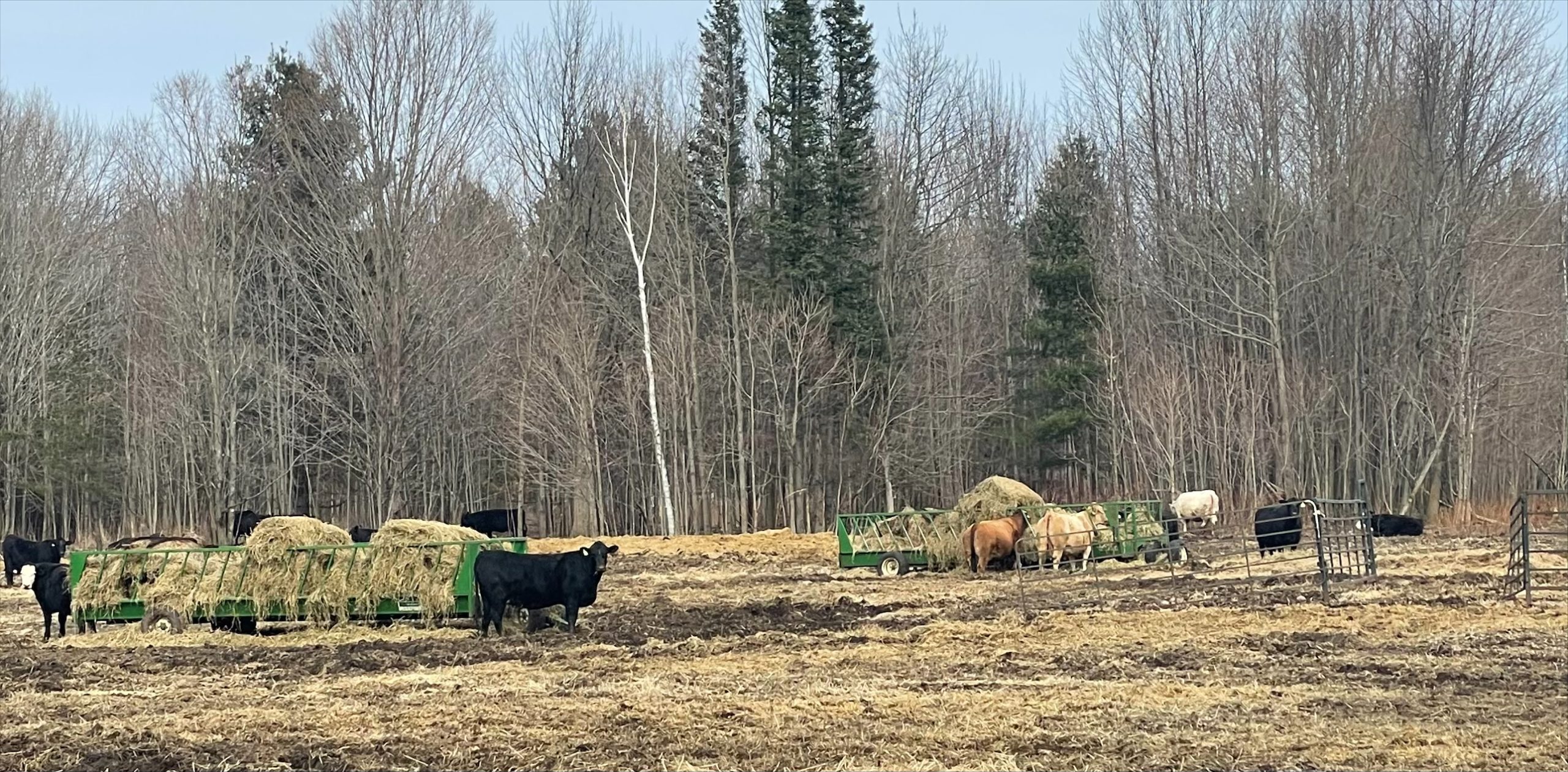
Although Dave and Greg operate separate businesses, they are able to integrate the cattle when fields are close by. He said that in the past he has planted rye after corn, leaving it for the cows to graze before soybeans are planted in the spring. This works when the corn fields are close to the cattle, and planted into stony or sandy ground where they can’t hurt the soil. Cattle are otherwise rotationally grazed through areas that are steep and rocky – not suited for cropland. At one point they did graze cover crops in the fall as well, but the logistics of moving fences while combining corn made them move away from that practice.
Dave noted that he tried growing 60” corn at one point but didn’t carry that practice forward. He felt that it didn’t work unless there were livestock integrated. They saw a yield lag, and he also noted that their weed pressure was high, commenting that the cover crop radishes grew too tall, went to seed, and ended up contaminating their corn samples with radish seed. They had to wait for the radishes to die off before combining the rest of the field.
Something they have tried and adopted is the use of Nutri-Pel fertilizer. This is a pelleted biosolid based fertilizer made from waste out of the city. He said that it has cut their synthetic phosphorus use by 75% and their nitrogen on corn by 20%.
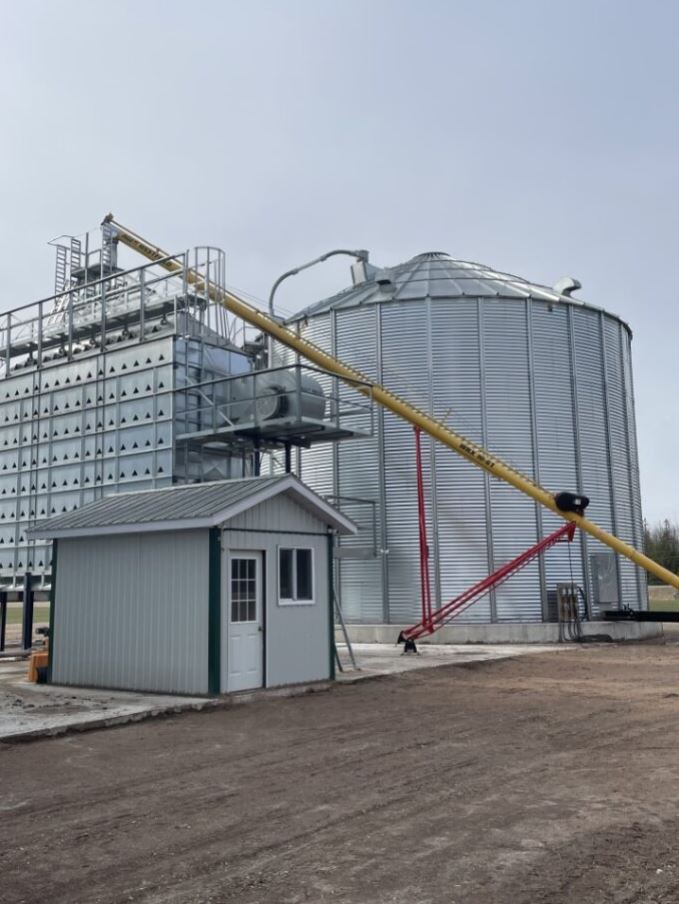
Dave mentioned that the closest elevator to their farm is a forty minute drive by car, which caused logistical issues at harvest time. In 2019 they put up their first bin, a StirAtor, which was used for IP soybeans. They added a couple more in 2020 and installed a mixed flow dryer in 2022. He hopes that these investments will give him more springtime marketing opportunities down the road, although he joked that that may not be holding true for this spring. He hopes that in the long term they will be able to save money on drying costs as well.
Last year Graham Farms took part in a project with their local Conservation Authority (CA) after higher levels of nitrates were found in ground water nearby. Dave says that the CA assumes that the nitrates are actually a result of activity in the area fifty years prior, as that is about the amount of time it would take to see groundwater contamination. All the same, the farm tracked planting, rotations, fertilizer and more for the year, helping the CA develop better measures of sustainable fertilizer practices.
Thinking about the ag industry as a whole; Dave says he recently read an article about expanding markets for biofuels and is excited to see where that goes in the future. He also noted that he’s very grateful to be part of a family farm. He’s happy to be able to raise his three young kids in a farming lifestyle, with all of the opportunities that provides them that couldn’t be had while living in town.
I would like to thank Dave Graham for sharing a little about his operation with the region in this edition’s member spotlight. It is always a pleasure to learn about what is happening on member farms and gain insight as to what is important in today’s industry. Soil & Crop is all about collaborating, sharing ideas and working to improve farm practices and those values ring true when farmers like Dave who share their story! Thank you!