By: Nancy Van Sas, Regional Communication Coordinator, Golden Horseshoe Region
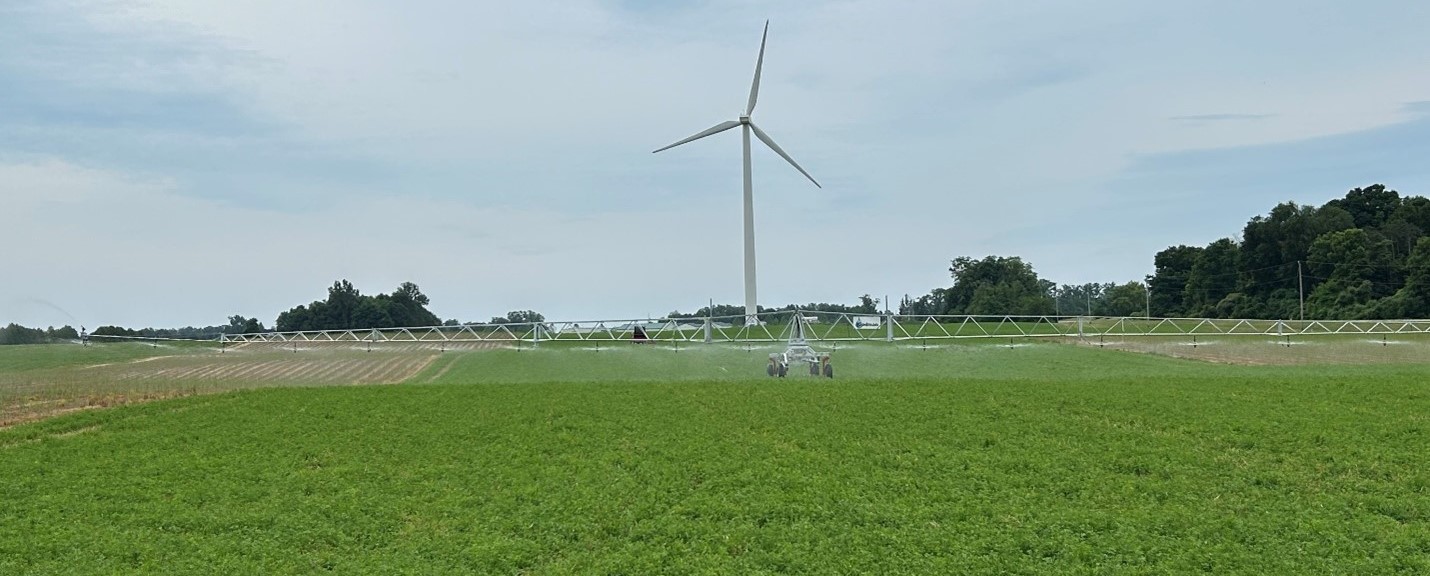
On June 25, 2024, Norfolk Soil and Crop Improvement Association (NSCIA) held an Irrigation Day in Port Burwell, Ontario, demonstrating the different types of irrigation systems available to producers. Ontario Ministry of Agriculture, Food and Agribusiness (OMAFA) staff were also on hand to discuss the movement of water through soil.
Why irrigate?
We all know the old saying ‘rain makes grain’. As our climate is changing, the availability of water in some parts of the world is also changing. Some regions, like California, are facing unprecedented challenges due to the lack of precipitation. Ontario is very fortunate to have a supply of freshwater lake water that remains available in our water cycle. However, even in Ontario, one of the limiting factors in agriculture is the availability of water.
Draining farmland has been a proven practice for many years now, making it a common practice for many farm operations across Ontario. In lighter topsoil and subsoils, drainage tile is not required as the ground naturally drains itself relatively quickly. Instead, it needs something that can help retain water in the ground. In a year like 2024 where significant precipitation is occurring very regularly, irrigation systems may not be used. Irrigation systems are like an insurance policy, they are there when you need them. Conversely, with changing weather patterns, drought-like conditions are becoming more common. Irrigation is no longer for just specialty crops such as fruits, vegetables, and tobacco; it is becoming more popular on lighter ground with many options available from pull-type reels and pivots to surface or below surface drip irrigation systems.
Not all soil is created equal
Irrigation Day was held in the Norfolk Sand Plains at Port Burwell. According to The Physiography of Southern Ontario, the “Sands and silts of this region were deposited as a delta in glacial Lakes Whittlesey and Warren.”
The soil type included Plainsfield, a fine textured sand soil that is naturally well drained. The hydrologic rating for this soil type is rapid, which means water moves relatively quickly through the soil as there is larger pore space, making movement of water relatively easy, compared to a clay where water can become ‘trapped’ in the pore space. According to Kevin McKague, Rural Water Quality Engineer at OMAFA, “The smaller the pore space, the more capillary rise, the higher the water will move. In a sand like this, you do not get quite as high of capillary rise.”
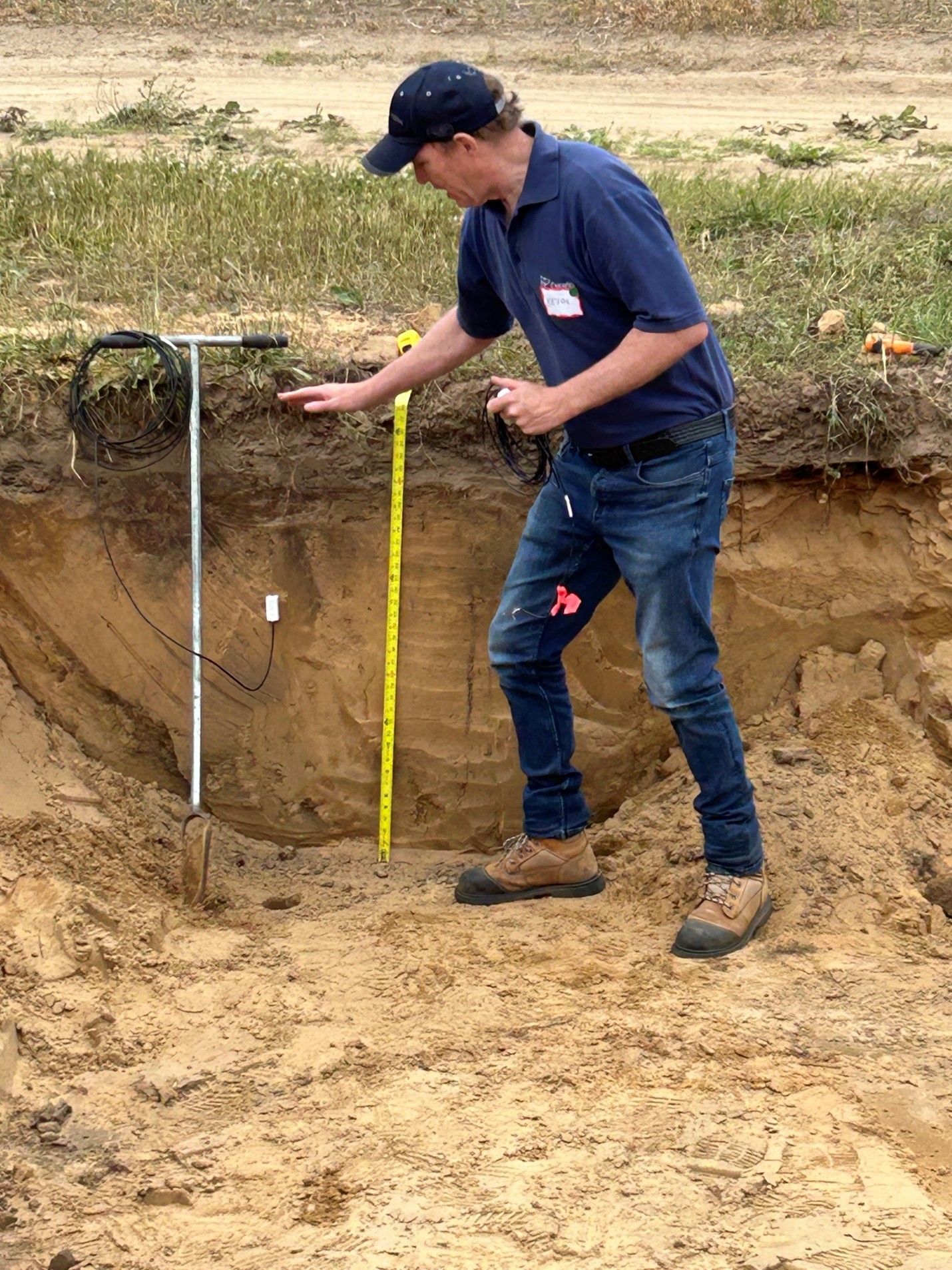
Water retention in this soil type is partially dependent on the subsurface material underlying the topsoil. A clay or clay loam subsoil will slow the movement of water through the soil. However, if you have lighter sand and/or sandy loam soils, the movement of the water throughout the horizons can be quite quick. At the Port Burwell location, available water is only present for a short period following a rainstorm. Soil health can improve the retention of water storage capacity in any soil type, but at some point, there is a limit to what soil health can do.
References
The Physiography of Southern Ontario, Ontario Geological Survey Special Volume 2, 3rd edition, Ministry of Natural Resources, page 154.