Jenn Nash, Quinte SCIA Regional Communication Coordinator
Dr. Laura Van Eerd was named OSCIA’s 2026 Honourary President earlier this year. Van Eerd is a Professor of Sustainable Soil Management in the University of Guelph’s School of Environmental Sciences, based at Ridgetown Campus. She called being chosen for the role “a real honour… a nice recognition of my career,” and said OSCIA’s producer-led structure matters to her.
A normal fall week for Laura at Ridgetown includes teaching soil principles to about 120 diploma students, preparing labs, writing grants and reviewing research data. Her team may be harvesting crops and taking samples in the field while she is back at the computer checking statistics and working with students to interpret the results.
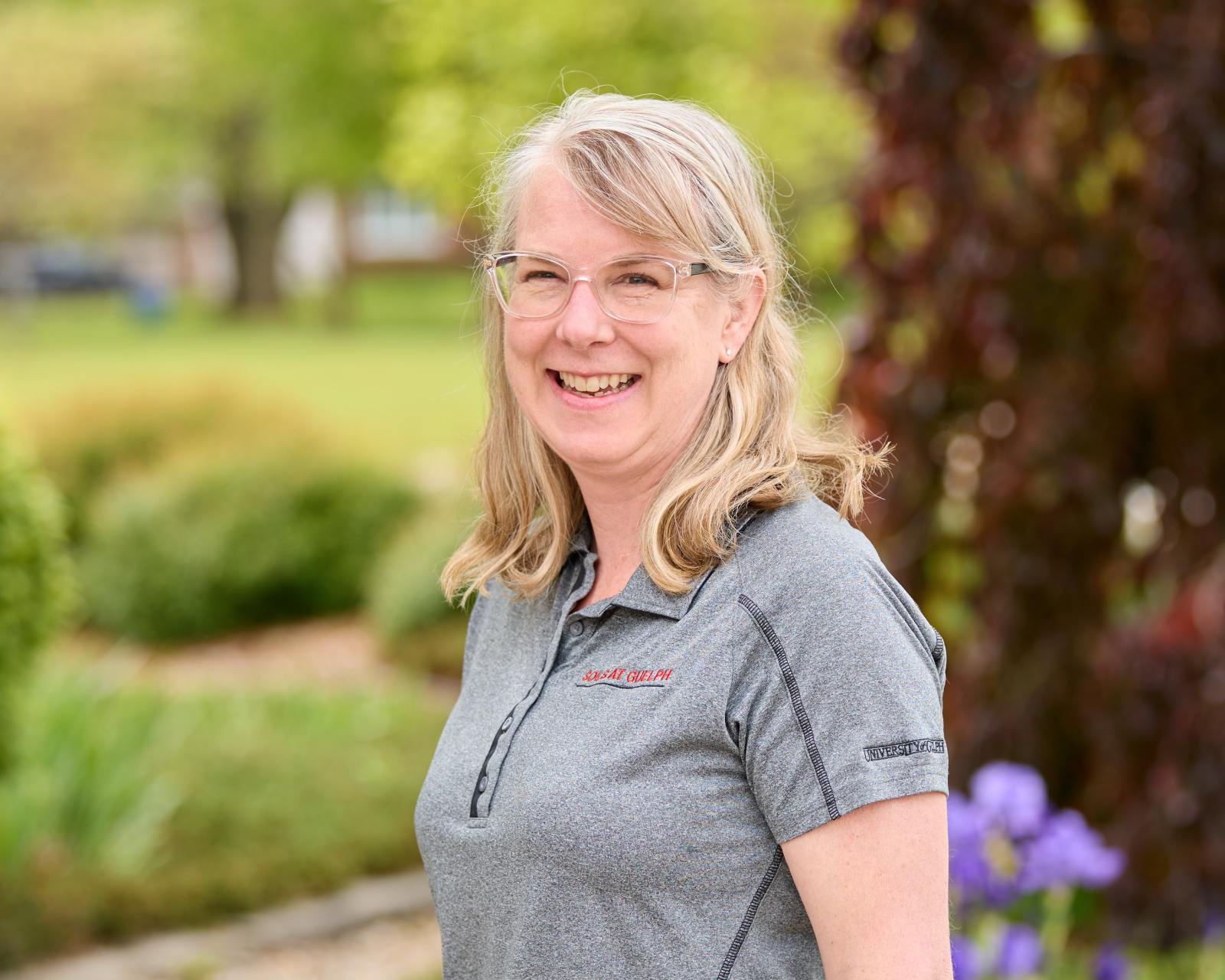
“It would look very boring if you showed up in Ridgetown,” she said. “You’d be like, ‘wow, she does a lot of computer work’.”
Van Eerd credits the dedicated team behind the research and says she is extremely grateful for their contributions. “It’s a privilege to work with so many talented people.”
Much of that work is aimed at understanding how producers care for their soil. Van Eerd studies which practices protect against erosion and build carbon, how nitrogen can be used more efficiently while maintaining yield and how cover crops fit into nitrogen management.
When asked which finding from her research has the greatest practical value for Ontario producers right now, her answer was ‘winter wheat’. “The most significant for farmers is keeping winter wheat in the rotation.”
Research from her program, along with work elsewhere in Ontario, shows the benefits of small grains in rotation. Winter wheat can build organic matter and carbon, improve soil health and protect corn and soybean yields, particularly in extreme weather years. It also creates an opportunity to add cover crops. Some of the value is not captured by looking at the wheat crop alone because benefits can carry into the crops that follow.
Van Eerd was involved from the beginning in the Ground-Truthing Soil Health Assessment and Plan (SHAP) project. Ontario introduced SHAP in 2023 using five indicators measured in the lab: soil organic matter, active carbon, respiration, potentially mineralizable nitrogen and aggregate stability. She applied for funding to cover analysis of producer-submitted soil samples so researchers could see how well those measures responded to management under real farm conditions.
The project ran from 2023 to 2025, with its report published in September 2026 (soilsatguelph.ca/soil-health-testing). The final dataset represented 1,033 geo-referenced locations across Ontario and a range of production systems. Information about how each field was managed was linked to the laboratory results, allowing researchers to compare the numbers with what producers were doing. Van Eerd described the database as “citizen science” driven by producers’ curiosity about their own soil health.
Organic matter, active carbon and respiration were generally higher in fields where producers reported using four to six soil-care practices, than where they were using zero or one. Those approaches included crop rotation, cover crops, organic amendments, reduced tillage, compaction reduction and minimizing residue removal. Active carbon can respond relatively quickly to a change, while organic matter may take several years.
The SHAP findings support an additional point Van Eerd made: soil health is not about one practice in isolation, but about stacking soil-care practices.
With cover crops, the questions quickly turn to species, mixtures and termination timing. Van Eerd said those details matter when there is a particular goal, such as weed control or nitrogen management. But the biggest gain, she said, is going from no cover crop to using one.
“It’s not that complicated, but it is because you have to think about your whole system,” she said. “It’s not just one thing.”
When asked what she still wants to understand, Van Eerd pointed to something long-term no-till producers have told her: residue became easier to manage after they added cover crops. She wonders whether fresh growth provides more food for soil life and, in turn, helps break down tougher material such as corn stover and wheat straw.
“We think it’s because of the soil health and the soil biology working,” she said. There is also a practical side to the question: “How do you get it done with the equipment you have?”
These days, Van Eerd is also thinking more about the social side of soil management: why producers make the decisions they do, what encourages change and what gets in the way. “What are the drivers and the barriers? What are you seeing in the neighbourhood?”
She says working with social scientists and economists who approach those questions differently is what keeps her excited.
When asked what OSCIA members might be surprised to learn about her away from her work, Laura shared her efforts to be “more intentional in how I look at things.”
One way she did that was through a photo-a-day challenge. She committed to one photograph every day for a year. The subjects included an anthill, a sunrise, Thanksgiving dinner and an eagle in a tree. The habit made her stop and notice things she might otherwise have passed by. She kept it up for more than a year.
“A lot of them aren’t great,” she said, but what mattered was the pause. Asked whether it might be a good challenge for producers, she agreed. “Try it for a week, try it for a month. And then you start looking and you see beauty more. You really do.”